|
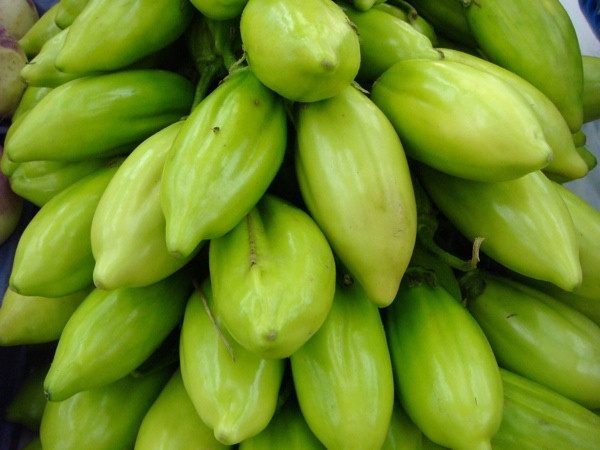
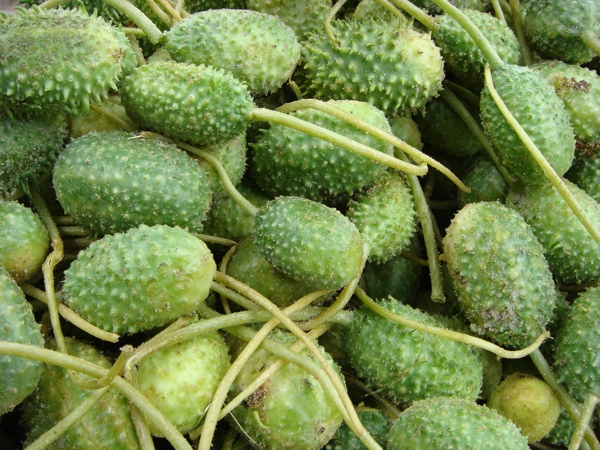
Both jiló and maxixe (see above) can be cooked the way you would prepare a zucchini. A lot of people will find jiló way too bitter for their taste buds..."amarga que nem jiló" (as bitter as jiló) is a common expression used to signify that life isn't very palatable, at least at the moment...I know of one person who can make it quite edible: dona Gertrudes, owner of the popular Bar Rebouças in the Jardim Botânico section of Rio. Read about them on our Little Black Book.
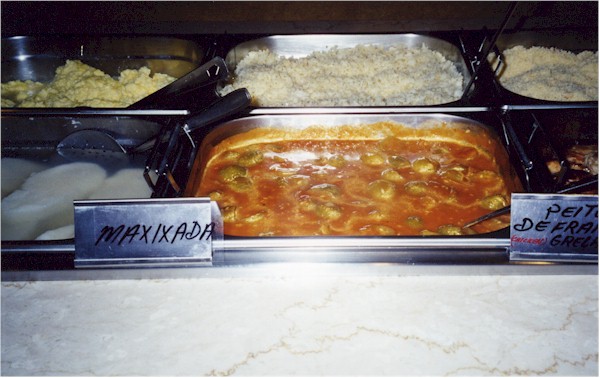
Maxixada, or maxixe stewed in a tomato, onion, etc., sauce, is quite popular in Recife. We photographed a maxixada at a restaurant called Chica Pitanga located on Boa Viagem Beach. Elsewhere, you'll have to look for restaurants that specialize in northeastern food.